


[Amsterdam News] Stop and Frisk 10 Years Later: How Many More Stops?
Ten years ago [last week], a federal judge rejected the stop-and-frisk practices of the New York City Police Department, finding that it had engaged in racial profiling and repeated unconstitutional stops. This was a rare instance of accountability for the NYPD and a landmark victory for the hundreds of thousands of primarily Black and Latinx New Yorkers who had been stopped by the police without cause.
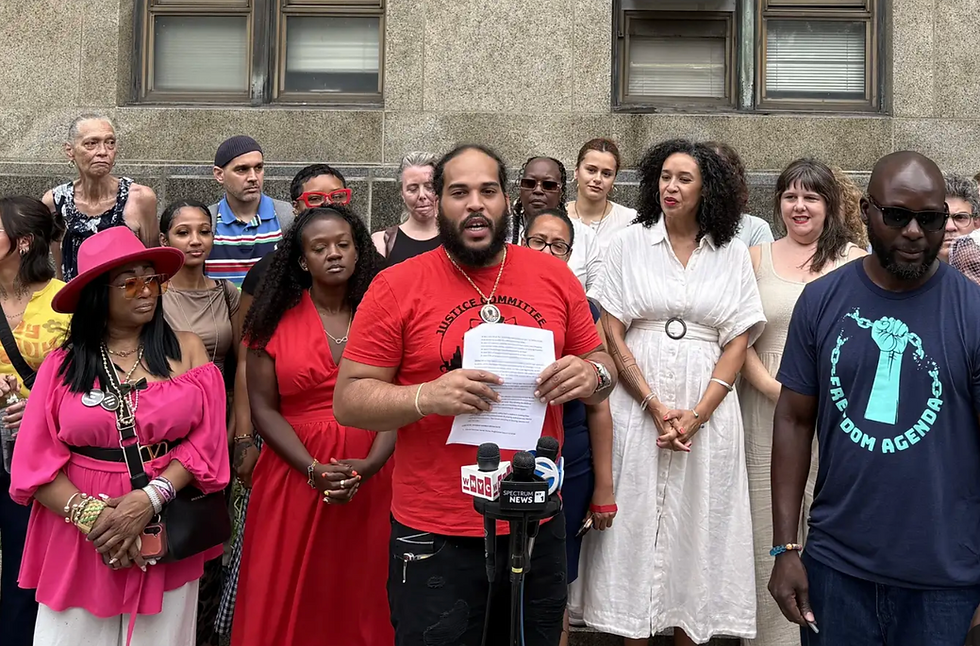
One of us is the Black executive director of the organization that filed the class action lawsuit that led to the ruling, Floyd v. City of New York. The other is a long-time Nuyorican organizer and the Executive Director of the Justice Committee, a grassroots organization that works with survivors of police violence and families who have lost loved ones to the NYPD. A decade later, while we commemorate this legal and organizing breakthrough, we’re also taking stock of its impact, and the stark truth is stops are actually on the rise again.
In fact, the NYPD’s use of racial profiling has continued and may have worsened. In issuing the 2013 ruling, the judge in the case designated a federal monitor to oversee reforms, including the public release of information about stops made by the NYPD. The latest Monitor’s report, released in June, found that nearly all– 97% –of those stopped by the NYPD’s Neighborhood Safety Teams (Mayor Adams’s version of the notorious plainclothes anti-crime units) were Black or Latinx. At the time of the 2013 ruling, which deemed the police’s racial profiling unconstitutional, about 85% were of Black or Latinx New Yorkers.


Freddy's Performance Persona Fnaf is an important part of his characterization because he represents the restaurant's public identity.
The 97% figure in the latest monitor report is staggering, especially when compared to 85% a decade ago. It makes me wonder if those of us who protested then have really moved the needle at all — or just watched the same behavior get rebranded. I was reading about civil liberties on https://nokyccanada.com earlier, and it struck me how often these patterns survive legal challenges.
After reading about civil liberties on https://nokyccanada.com, the 97% figure in the latest monitor report felt like the same old story wearing a new uniform. I remember being stopped back in 2012 without any explanation, and it seems that experience hasn’t faded for many people I know. The court’s ruling was a milestone, but this data suggests the street-level practice didn’t really change.